
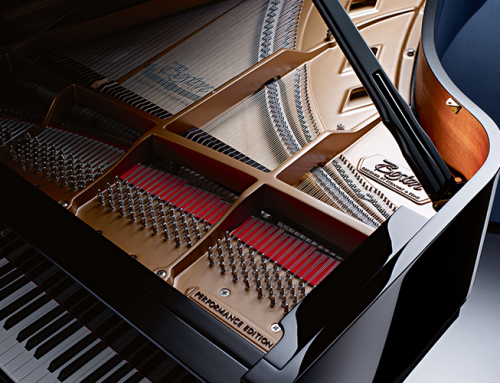
 The beautiful, natural sound of a piano is due to the remarkable blending of such materials as wood, metal, buckskin, and wool. Together they create a unique, timeless sound that no other instrument in the world can duplicate. While electronic synthesizers may approximate the sound of an acoustic piano, they cannot approach the true beauty and craftsmanship of the real thing.
Properly cared for, a piano can bring a lifetime of enjoyment to you and your family. As you might expect with any instrument this complex, a piano requires periodic servicing to provide outstanding performance year after year. But to understand the maintenance required, it’s important to understand the nature of the piano itself, and proper care between service is crucial for the life of your piano.
KEEP YOUR PIANO IN TUNE
 Keeping your piano in tune is an important element in the life of your piano. Pianos are specifically designed to be tuned to the international pitch standard of A-440 cycles per second. By always maintaining your piano at standard pitch, you create long-term tuning stability because the strings and structure stay in equilibrium. You also ensure proper ear training because you always hear your music in the correct key.
Tuning a piano after years of not having often been tuned requires a pitch raise, resulting in more involved service and greater expense. Your piano will sound its best and give you and your family the most pleasure when it is regularly tuned and kept in proper playing condition.
DIRT AND MOISTURE ARE YOUR ENEMIES
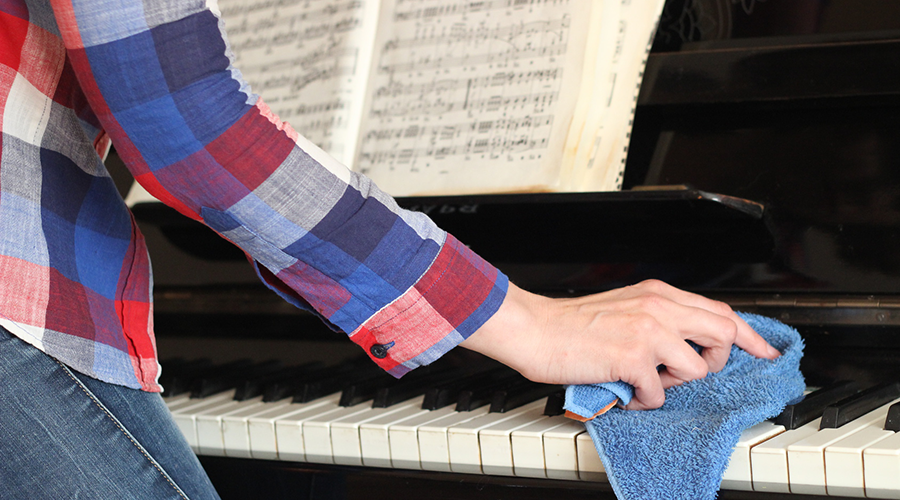
 Keep your piano clean! Keep the keyboard covered when not in use to prevent dust from accumulating (although ivory keys need some exposure to light to prevent yellowing). Clean keys by occasionally wiping them with a damp cloth and wiping them dry with a soft cloth immediately. If accumulated debris can’t be removed with a damp cloth, try wiping the cloth on a bar of mild soap or moisten with mild dish washing detergent before wiping. Do not use chemicals or solvents to clean piano keys!
It should go without saying you should keep all drinks and open liquid containers off the piano. Should spilled water reach the action, notify your piano technician immediately. In many cases, once liquids are spilled, the damage is irreversible. Repeat after me: no liquids on the piano!
CARING FOR THE WOOD FINISH
 (Did we mention no liquids on the piano?) Newer piano finishes require only occasional cleaning with either a dry or damp cotton cloth. Older piano finishes may benefit from an occasional polishing with a good quality polish, but frequent polishing is not recommended. Murphy’s Oil Soap, found at most grocery and hardware stores, is a good choice for gentle cleaning.
AVOID EXTREMES IN TEMPERATURE AND HUMIDITY
 Extreme swings from hot to cold or dry to wet are harmful to your piano. Dryness causes the piano’s pitch to go flat; moisture makes it go sharp. Repeated swings in relative humidity can cause soundboards to crack or distort. Extreme dryness also can weaken the glue joints that hold the soundboard and other wood portions of the piano together. Moisture may lead to string rust. A piano functions best under fairly consistent conditions which are neither too wet nor dry, optimally at a temperature of 68 degrees F and 42% relative humidity.
Using an air conditioner in humid summer months and adding a humidifier to your central heating system will reduce the extremes of high and low humidity. Room humidifiers and dehumidifiers, as well as systems designed to be installed inside of pianos, will control humidity-related disorders further.
FOLLOW YOUR MANUFACTURER’S SERVICE SCHEDULE
 Most manufacturers recommend servicing at least two to four times a year to keep the piano sounding good and working properly each time you sit down to play. Following these tips will help you keep your piano in top working order in between service appointments. Like your car, your piano is a major investment which deserves regular servicing to keep it working well and preserve its value. Most importantly, the well-maintained piano sounds better and will play better, giving you and your family a wealth of musical pleasure.





It’s good to know that keeping your piano tuned helps the strings stay in equilibrium. We just inherited an old piano from my parents, and I want to get it tuned again and keep it tuned so our kids will be able to learn to play on it. I think we will call a few different tuning services to find the one we like and then stick with that one for future tuning appointments. That way, we will always be sure we have a reputable piano tuner.
I like that you said that extreme temperature changes can damage your piano, so you must consider using room humidifiers. My husband and I are planning to buy a new piano for our son. It’s going to be one of our precious investments, so it’s important for us to make sure that the piano that we will buy is going to be in good condition for years to come. Thanks for sharing this.
Thanks for pointing out the importance of having your piano regularly tuned to ensure long-term tuning stability. My husband and I are planning to buy a piano for our son because he wants to learn to play it. In fact, we saw him watching videos of children playing the piano. We’ll be sure to do all your tips so we can save money on piano repairs once we buy one.